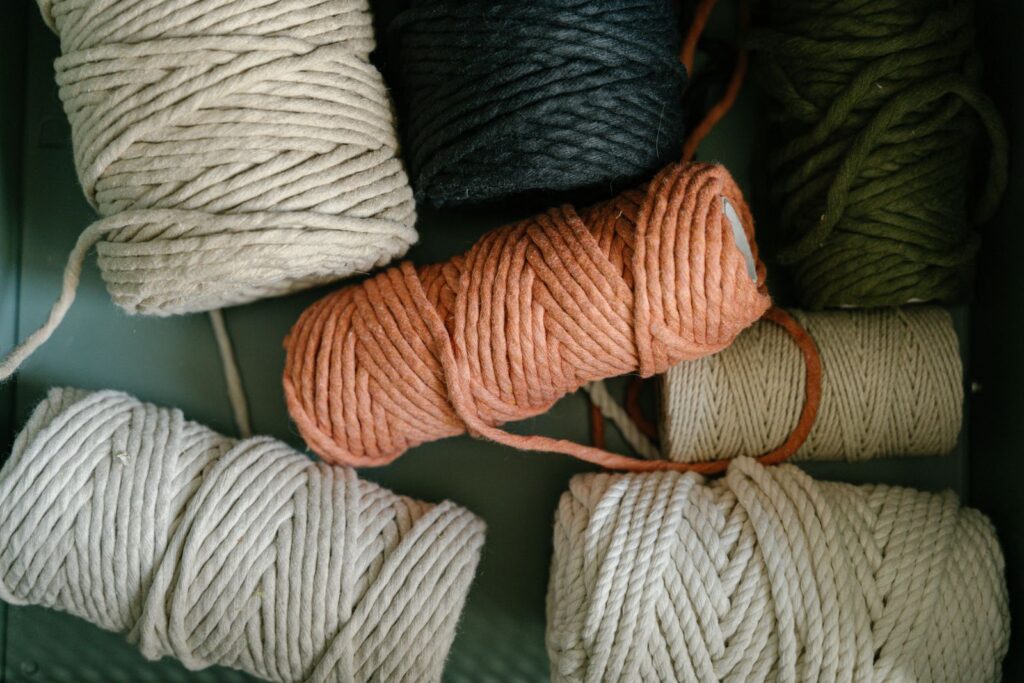
Yarn “weight” has nothing to do with how heavy a ball is. It describes how thick the strand of yarn is. The thickness decides which hook you use, how big your stitches are, and how your finished project feels. Pick the wrong weight and a pattern can come out twice the size you expected.
The good news is that there is a standard system. The Craft Yarn Council numbers yarn from 0 (thinnest) to 7 (thickest), and most yarn labels show this number in a small ball-of-yarn symbol.
The 8 yarn weight categories
| Number | Name | Also called | Common crochet hook |
|---|---|---|---|
| 0 | Lace | Crochet thread, cobweb | Steel hooks, up to 2.25 mm |
| 1 | Super fine | Sock, fingering, baby | 2.25–3.5 mm |
| 2 | Fine | Sport, baby | 3.5–4.5 mm |
| 3 | Light | DK, light worsted | 4.5–5.5 mm |
| 4 | Medium | Worsted, aran, afghan | 5.5–6.5 mm |
| 5 | Bulky | Chunky, craft, rug | 6.5–9 mm |
| 6 | Super bulky | Roving | 9–15 mm |
| 7 | Jumbo | Roving, arm-knitting yarn | 15 mm and larger |
These hook ranges are for regular projects like blankets and garments. For amigurumi you’ll usually go smaller (see below). For exact hook conversions, see our crochet hook sizes chart.
What each weight is best for
- Lace (0): doilies, delicate shawls and fine lace edgings.
- Super fine (1): socks, lightweight baby clothes and tiny amigurumi.
- Fine (2): baby blankets, light tops and summer garments.
- Light / DK (3): sweaters, baby items, small amigurumi and ornaments.
- Medium / worsted (4): the all-rounder. Hats, scarves, blankets, bags and most amigurumi. It’s the best weight for learning.
- Bulky (5): quick cozy hats, cowls and thick blankets.
- Super bulky (6) and jumbo (7): chunky blankets, big plushies and projects you want to finish in an evening.
Worsted vs aran vs DK: the confusing middle
The names in the middle of the scale overlap and vary by country. In the US, “worsted” is the standard medium weight. In the UK, “aran” is slightly thicker than US worsted, and “DK” (double knitting) is a little thinner. All three are often interchangeable for amigurumi, but for garments where size matters, check the yarn’s meters per 100 g (or yards per ounce) and compare it with the yarn in your pattern.
How to identify yarn without a label
Lost the label? Use the wraps per inch (WPI) method. Wrap the yarn snugly (without stretching) around a ruler or pencil for 1 inch (2.5 cm), with the wraps sitting side by side. Count them:
- More than 18 wraps: lace or super fine
- 12–18 wraps: fine or light
- 9–11 wraps: medium (worsted)
- 7–8 wraps: bulky
- 6 or fewer: super bulky or jumbo
Yarn weight for amigurumi
Amigurumi patterns need tight stitches so the stuffing stays hidden. That’s why they use a hook smaller than the label recommends. Typical combinations:
- Worsted (4) yarn with a 3.5–4 mm hook, for toys about 8–15 cm tall
- DK (3) yarn with a 2.5–3 mm hook, for ornaments and keychains
- Chenille or super bulky (6) yarn with a 5–6 mm hook, for big squishy plushies
Every pattern on this blog lists the yarn weight and hook. For example, the kawaii penguin uses worsted yarn with a 3.5 mm hook. Want to know which fibers work best? Read our guide to the best yarn for amigurumi.
Can I substitute a different weight?
You can, but the size of your project will change. Thicker yarn and a bigger hook make a bigger piece; thinner yarn makes a smaller one. For toys and decorations that’s usually fine, and it’s a fun way to make a “family” in different sizes. For hats, sweaters and anything that needs to fit, stay with the weight in the pattern and check your gauge.
FAQ
What is the most common yarn weight?
Medium (#4), often sold as worsted or aran. It’s widely available in every color and fiber.
Is DK the same as weight 3?
Yes. DK and light worsted both fall in category 3.
Can I hold two strands together?
Yes. Two strands of a thinner yarn held together act roughly like the next weight up or more. Swatch first to check.
Save this guide to Pinterest so you can check it the next time you’re standing in the yarn aisle!
Cover photo: inspiration photo by Antoni Shkraba on Pexels